Wellington water and mold restoration
Water Damage Restoration in Wellington, Florida
Water damage restoration and mold damage restoration for homes, farms and businesses across Wellington and eight nearby Palm Beach County communities. We work from 12841 Meadow Breeze Dr, read moisture before anything comes out, and put the scope in writing. Call (561) 960-0937.
- Based at 12841 Meadow Breeze Dr, Wellington
- Palm Beach County coverage
- Readings recorded before removal
- Two services, kept separate
What we do
Water Damage and Mold Restoration in Wellington, FL
Water Damage Restoration
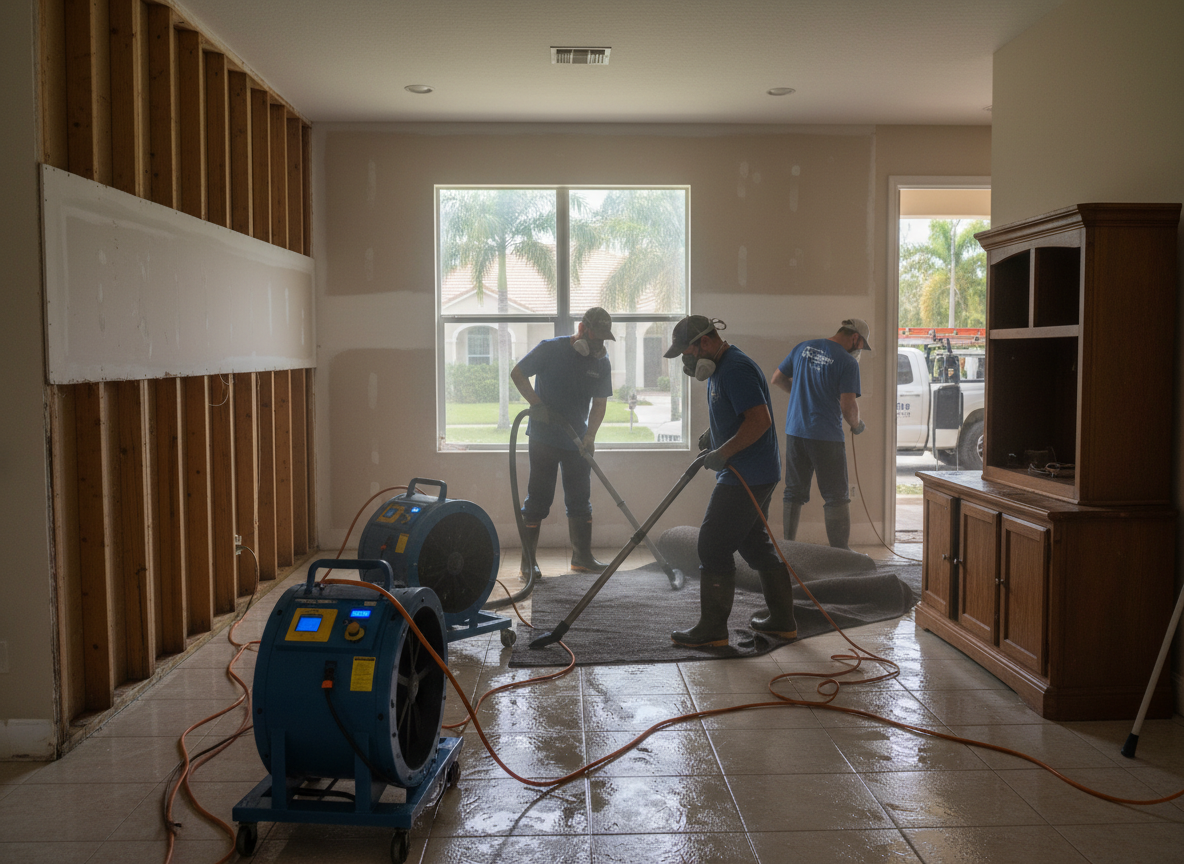
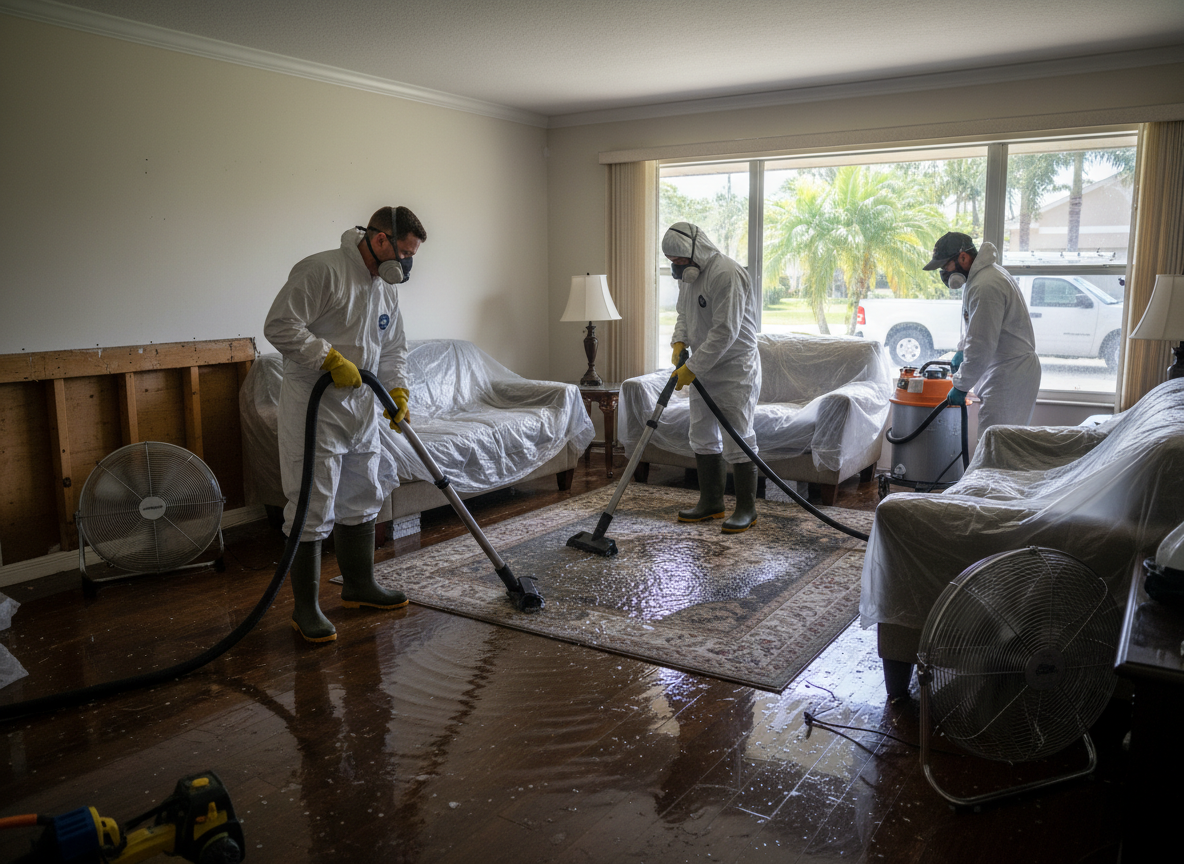
Water removal, water extraction, storm damage and water leak detection for Wellington homes, farms and businesses, with the wet boundary measured and the work dried against readings.
Learn more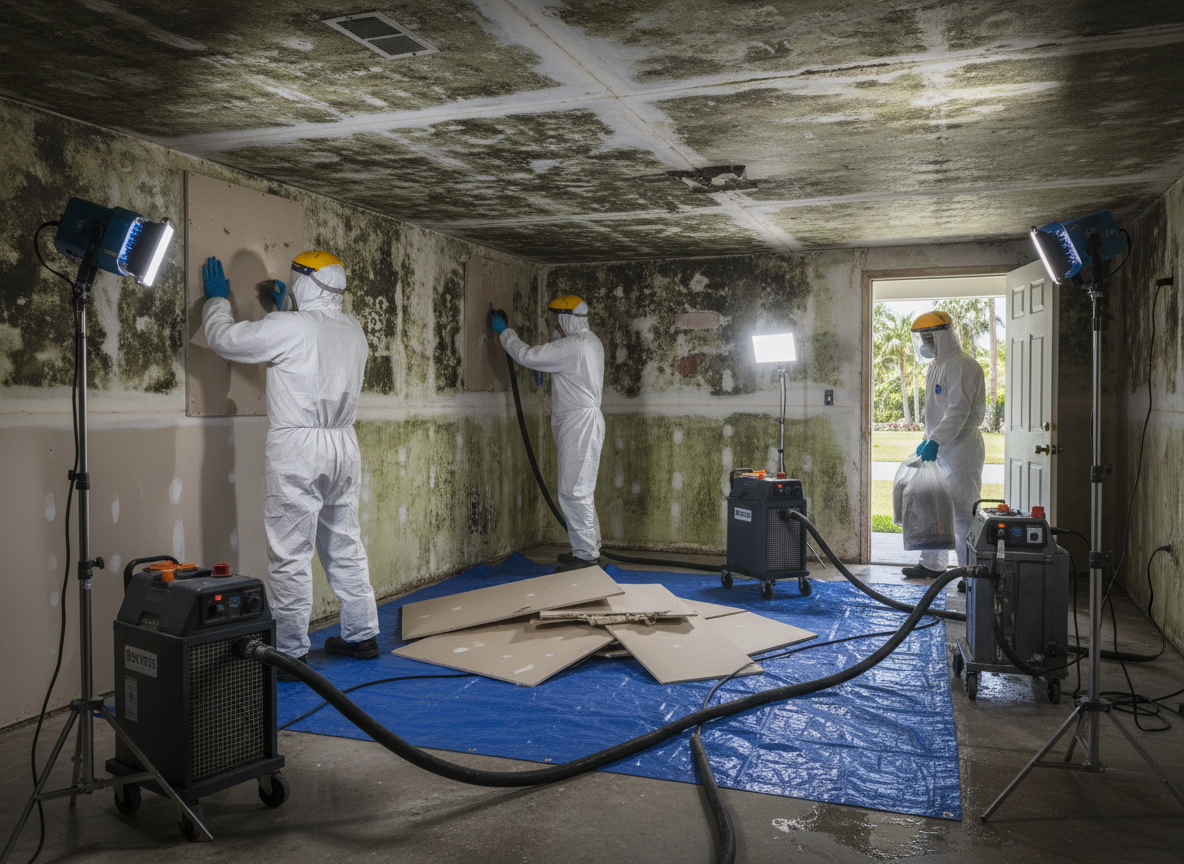
Mold Damage Restoration
Containment, removal of affected material and correction of the moisture source where growth is visible or a cavity has stayed damp in a Wellington home, barn or condo.
Learn moreA Wellington business built around the reading, not the pitch
Mold Damage Restoration Wellington is a water damage and mold restoration business working from 12841 Meadow Breeze Dr in Wellington, Florida, in Palm Beach County. Wellington is an inland village at the edge of the Everglades, built on drained farmland and known around the world for its equestrian season. The housing here runs from 1970s and 1980s planned-village houses on canal lots to large equestrian estates with barns, tack rooms and guest apartments, plus low-rise condos in the 55-plus communities to the east.
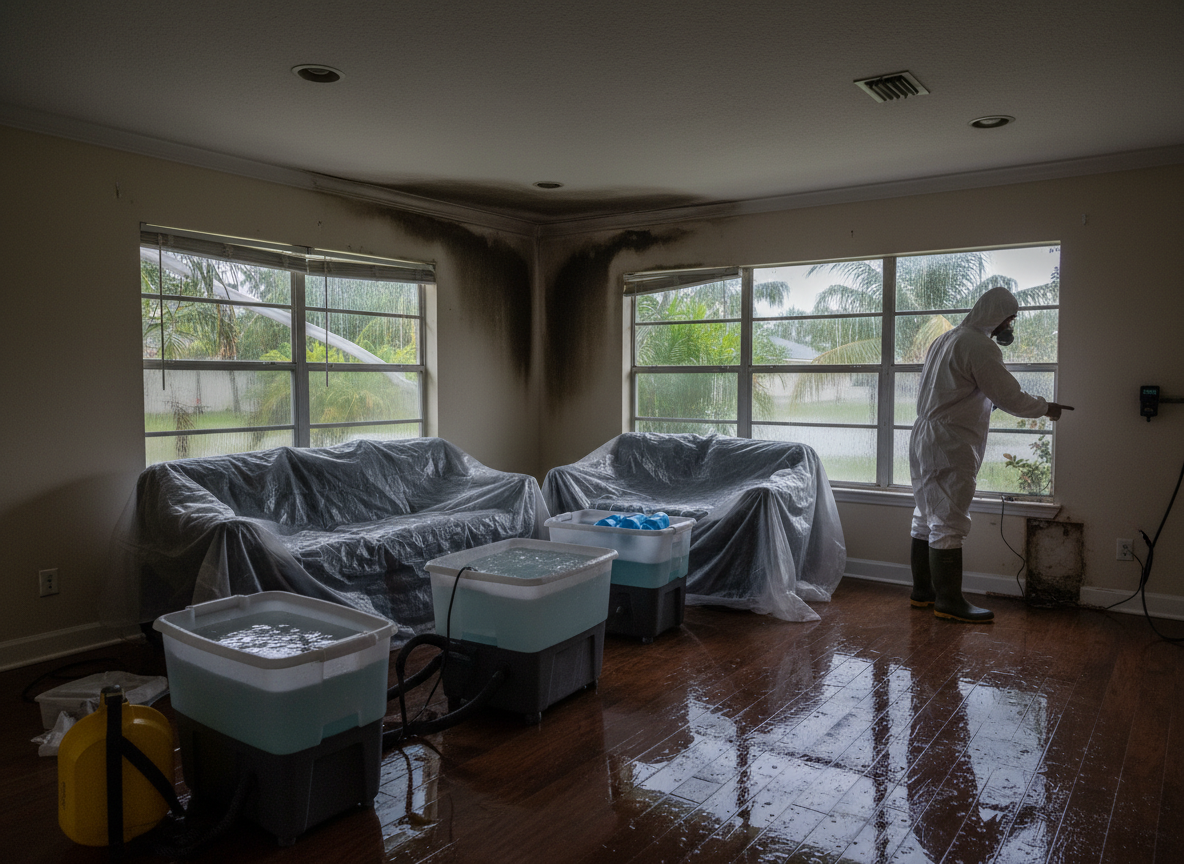
The work is deliberately narrow. Water damage restoration covers water removal, water extraction, storm damage and water leak detection, and those four sit inside this one service rather than being sold as separate pages. Mold damage restoration covers containment, removal of material that has supported growth, and correction of the moisture that allowed it. Keeping the scopes separate is what stops a job from turning into an open-ended promise.
- A moisture assessment before any removal is proposed
- A written scope that separates drying from permanent repair
- Containment and air filtration where growth is disturbed
- Photographs and readings kept in sequence
- A named hand-off when the repair belongs to another trade
- Only the facts this business has supplied
How it works
What to expect, start to finish
Call and safety guidance
Describe what is wet, where it came from and whether water is still running. We tell you what to shut off and which rooms to keep clear before anyone arrives.
Read the building and write the scope
We read moisture with meters and thermal imaging, mark the wet boundary and confirm whether the source is still active. The scope names removal, drying and any repair that belongs elsewhere.
Remove water and saturated material
Standing water comes out first, then water held in carpet, pad, cabinet bases and insulation. Material that cannot be saved is removed, bagged and disposed of.
Dry against readings
Air movers and dehumidifiers run at the marked points until the assembly reaches a dry standard. Readings are recorded at each visit rather than assumed.
Verify and hand back
Final readings are compared with day one, room by room. You get the record of what was found, removed and read, plus the name of any trade that owns the next repair.
Why Choose Us
Nothing here is a badge we bought. The difference is the sequence: find the source, read the moisture, contain the work, dry to a number, and say plainly which repair belongs to another trade.
The source is found before equipment is set
A supply line, a condensate drain, a door track, a roof opening and a canal that backed up all leave different evidence. We identify which one is responsible before an air mover runs, because drying a room without correcting the source only moves the problem to the next rain.
Readings at marked points
Each reading point is marked by room and location, photographed and written down. Drying ends when the material reaches a dry standard, not when a surface feels dry to the hand.
A written scope before work starts
The scope separates emergency water work from permanent repair. It names what is being removed, what is being dried and what sits outside our trade, so you can see where our work starts and stops.
Wellington buildings read as they are
Block and stucco on slab, a 1980s canal-lot house, a barn with its own water service and a low-rise condo in a 55-plus community all hold water differently. We read the assembly in front of us rather than applying one method to every address.
Two services, no blurred edges
Water damage restoration and mold damage restoration are separate services with separate steps. Water removal, water extraction, storm damage and water leak detection sit inside the first. Nothing is padded to sound bigger.
An honest hand-off
A failed supply line belongs to a plumber, a roof opening to a roofer, a condensate line to an HVAC contractor and a structural rebuild to a general contractor. We identify the component and name the trade that owns the repair instead of stretching our description.
Access asked about on the first call
Gated villages, barns set back from the road, horse trailers in the drive and condo buildings with shared corridors all change how a job is set up. We ask about gates, animals, parking and association rules before the visit, so the assessment is not spent waiting at an entrance.
Inland humidity is part of the job
Wellington is not on the coast, but the air is still warm and heavy for most of the year, and air conditioning keeps interior surfaces cool enough to condense moisture. A surface can read dry while the cavity behind it stays wet, so we check the air and the assembly, not just the floor.
Service area
Water Damage Restoration Across Wellington and Nearby Areas
From the blog
Water Damage Restoration Tips & Guides for Wellington, FL
Good to know
Water Damage Restoration Questions — Wellington, FL
Still have questions? Call (561) 960-0937 and we will talk it through.
(561) 960-0937